Change Begins with People

https://www.edsurge.com/news/2022-01-27-secretary-of-education-envisions-solutions-that-are-low-tech-high-touch?utm_campaign=site&utm_content=share-128 #edtech via @EdSurge

This article from the U.S. Secretary of Education Miguel Cardona highlights his view that changes in education are not connected to “technology, virtual learning, internet access or any of the digital tools” (Koenig, January 2022). And he’s not wrong. The issues that have plagued and continue to plague education are deeply rooted in the system itself. As Tyack and Cuban wrote “the grammar of school is a product of history . . . it results from the efforts of groups that mobilize to win support for their definitions of problems and their proposed solutions” (Tyack & Cuban, 1995, Loc 1123). Notice the date of that statement: 1995.

Now, I recently retired from teaching after 27 years in the classroom so I’ve been privy to the many changes, solutions, and pendulums of initiatives over the years. Most of the changes I’ve seen have been little more than a band-aid to a much larger problem. Take mobile devices in the classroom as an example. Yes, it’s nice (and very convenient) to have access to technology to provide students resources not readily available in the classroom but also as a venue for them to share their learning with a wider audience than just their teacher (me). But adding mobile devices doesn’t change the learning. In fact, research has shown that the adoption of technology in the classroom has not been the catalyst of change as some would have hoped (Kale & Goh, 2014; Shapley, Sheehan, Maloney, & Caranikas-Walker, 2011; Stefl-Mabry, Radlick, & Doane, 2010; Voogt, Erstad, Dede, & Mishra, 2013). According to Cuban, for technology integration to have a positive effect on student learning, the tasks behind its use need to be grounded in pedagogical changes (Cuban, 2013). And, as a classroom teacher and researcher, I completely agree.

I also firmly believe that learning changes with thoughtful planning, flexibility, and an open-mind on the part of everyone involved: teachers, students, administrators, and parents. So, it’s not just pedagogical decisions by teachers, and change certainly does not hinge on whether technology is used (or not ).

The changes needed in education have to be more than just a band-aid…and it’s beyond simply providing more money to schools. I worked at two Title I schools during my entire tenure. We were provided money from the state and federal government. But that didn’t necessarily translate into a revolutionary change for any of the stakeholders. From my experience, that just meant we had money to purchase more devices, licenses/subscriptions, add more after school tutoring session, and maybe add a few more professional development workshops for teachers.

Band-aids.

For significant change to occur in education, the whole educational system needs to change. The grammar of schooling needs to change. (Now that’s a blog post for another time.)

But how about this?

Instead of leaders and legislators telling schools and the general public what needs to change, why not ask the ones in the trenches what changes they believe are needed? One of the things that I found very alarming (and sad) were reports from certain entities/organizations who claimed that parental voice was not important in the educational decisions that impacted their own children.

Now, I’m not going to get into a political debate here. I just want to point out that leaving out a huge stakeholder group (parents…aka tax-payers) is not (and should not be) an option. This pandemic seems to have brought out the ugly side of people as I see a large number of finger-pointing going on–playing the blame game, if you will. And shutting out parents from educational decisions? Not good.

But what about the other silent voices out there? Teachers and students?

The solutions to the various educational problems will not be found in more legislation or funding. What I would like to see is a concerted effort to find out:

  • What do teachers need?
  • What do students need?
  • What do parents need?
  • What do administrators at the school site need?

Because I tell you what they don’t need: solutions from people far removed from the classroom.

I applaud U.S. Secretary of Education Miguel Cardona for realizing that changes in education do not rest with technology devices and connectivity to the Internet. Because change doesn’t happen with things. Change happens with people.

How about talking to students, teachers, and parents about what they need? And I don’t mean a small sample size. I mean HUGE…from a variety of demographics and locales.

One of my goals now that I’ve retired from teaching is to figure out a way to amplify the voices in education. I don’t have access to a huge demographic, but change starts with small steps.

I have a project in mind.

Stay tuned.

References

Cuban, L. (2013). Inside the black box of classroom practice: Change without reform in American education. Cambridge, MA: Harvard Education Press.

Kale, U., & Goh, D. (2014). Teaching style, ICT experience and teachers’ attitudes toward teaching with Web 2.0. Education and Information Technologies, 19, 41–60. doi:10.1007/s10639-012-9210-3

Shapley, K., Sheehan, D., Maloney, C., & Caranikas-Walker, F. (2011). Effects of technology immersion on middle school students’ learning opportunities and achievement. The Journal of Educational Research, 104, 299–315. doi:10.1080/00220671003767615

Stefl-Mabry, J., Radlick, M., & Doane, W. (2010). Can you hear me now? Student voice: High school & middle school students’ perceptions of teachers, ICT and learning. International Journal of Education and Development Using Information and Communication Technology, 6(4), 64-82. Retrieved from http://ijedict.dec.uwi.edu

Tyack, D., & Cuban, L. (1995). Tinkering toward utopia: A century of public school reform. Cambridge, MA: Harvard University Press.

Voogt, J., Erstad, O., Dede, C., & Mishra, P. (2013). Challenges to learning and schooling in the digital networked world of the 21st century. Journal of Computer Assisted Learning, 29, 403–413. doi:10.1111/jcal.12029
Embracing the Change

It has been a long time since I’ve had the chance to blog (let alone feeling like I had the energy to do so). To say that the past two years have been challenging is an understatement. The pandemic notwithstanding, I found myself with a huge undertaking–assuming the role of caregiver for my mom.

I was not only trying to balance my own stress and fears of the unknown (harken back to March 2020), but I also had to take on additional responsibilities of an aging parent. Looking back, I don’t know how my head did not explode from the enormous weight that landed on my shoulders.

To be clear, I am not in any way saying that my challenges during this pandemic were(still are?) more severe than any other person as I know other people have had it worse off than me. During this pandemic, I’ve had a roof over my head, a warm bed to sleep in, a job that secured a steady income, and a husband who is my anchor. In other words, I’ve been blessed.

As a pragmatic person, I think through all potential options before making a decision. However, all the thinking in the world did not prepare me for watching my mom’s health deteriorate. It’s been several months since my mom has joined my dad in heaven, and I am still struggling with the myriad of changes that keep coming my way.

The pandemic and mutations of the virus continue to challenge all of us. And unfortunately, it doesn’t seem as if those changes are done. #sigh

Even classroom teaching continues to evolve during this pandemic–and my head starts to spin after reading that several major universities are opting to go back to remote teaching because…what does that mean for K12?!?! #argh

It seems that the only constant in my life is the consistency of change.

I guess I can either fight a losing battle or simply embrace the change.

Here’s hoping that 2022 is a year of positive change. And, if it’s not positive change, may we all be equipped with the knowledge, motivation, and strength to readjust to our surroundings.

My happy place…

Summer BREAK

Fish: 0 Lost lure: 1 Beautiful sunset: Priceless

This was the first summer in four years where I wasn’t in school or teaching. The past four summers were consumed by my doctoral journey both as a student and as a professor. Don’t get me wrong, I loved doing both…but this girl needed a forced break.

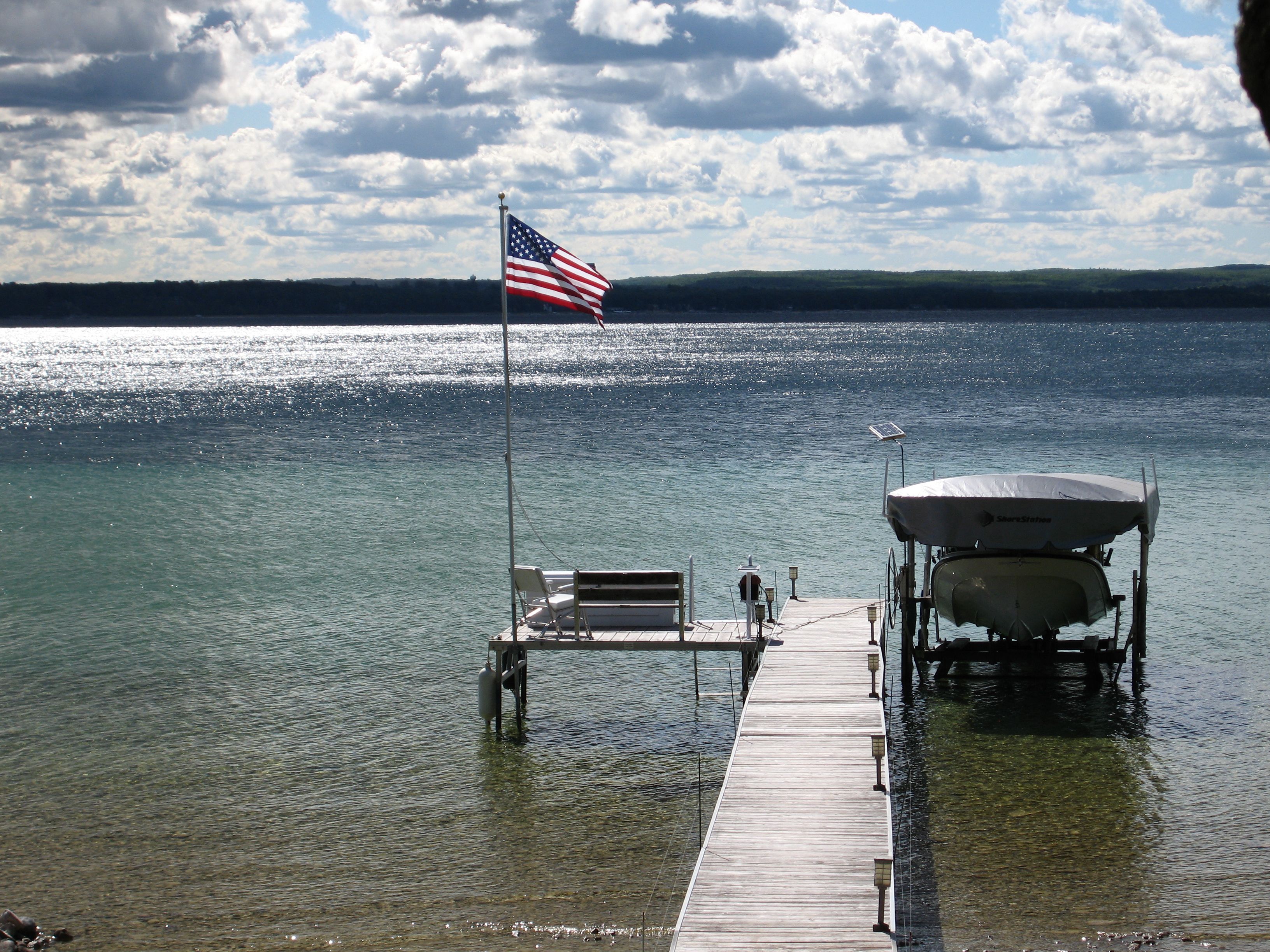
Being at our second home in the beautiful state of Michigan was absolutely wonderful. I slept in, read books, enjoyed the lake, and day-dreamed. I cannot say that I didn’t think of work (I did) or what I wanted to do with the next chapter of my life (because I did that, too). Luckily I spent more time contemplating my Chapter 2, my next adventure, more than anything. The reason for getting my doctorate was both personal and professional. Personal because I read John Streckley’s book The Big Five (if you haven’t read it, I highly suggest you do!) and professionally because I wanted options beyond what the four walls of a classroom could give. 

The pandemic (for all of its craziness) gave me a good idea of what remote working was like. And I liked it—I really did. The flexibility of the day and the fact that my commute was cut down from 26 minutes to two was AH-mazing. I had more time in the day to do things because I didn’t spend it on the freeway. And, while I didn’t like all of the Zoom meetings, I understand that it’s the “cost” of working remotely. The pandemic also quickly helped me get over being on camera. So kudos, pandemic, as that was a hill I was willing to die on. 😉

I have mainly stayed away from the news and relied on email and listservs to provide me interesting tidbits of reading. I finally was able to indulge in one of my favorite activities: reading. It pained me to realize that as a result of the chaos of teaching during the pandemic, I had only managed to finish ONE BOOK as of June 2021. One. Pathetic.

Since I’ve been on summer break, I have read 35 books (and counting). My interests are far and wide with most of my books falling within the historical fiction genre, but I also read my share of non-fiction books as well. 

I bring all of this up because I needed this break. I needed to not feel the push and pull of studying or teaching. I needed to remove myself from the 24-hour media cycle. I needed a separation from the hustle and bustle of life in California and all of the personal and professional obligations that continuously call my name. I needed to be forced to slow down.

After reading all this, you might be thinking that I should be ready to return to the classroom. I had a nice two month break, after all. 

But you’d be wrong. 

The few news reports that managed to break into my bubble here in Michigan only revealed news that makes my head (and heart) hurt. The “guidance” from the CDC and leadership from the state and local authorities in California continue to make me feel as if I’m on a merry-go-round seesaw (yes, it’s an up-and-down centripetal feeling). I would like nothing more than to put my head into the sand until this whole thing blows over. And by “thing” I mean teaching during the pandemic

Don’t get me wrong, I loved each and every student who attended my Zoom sessions, who opened and responded to my emails, who participated in online discussions, who tried their best to complete the assignments, and who took the time to chat back-and-forth with me via the comments in their Living History Journal. So, the bottom line is: I loved my students. And I loved my colleagues and the perseverance they showed throughout this mess. #heroes

But I feel tired at the thought of returning to work.

There is much talk about “teacher wellness” out there. Good-intentioned people are posting positive intentions on social media. Organizations are publishing lists of ways to de-stress and resources to use. And I suspect many districts are now putting “educator wellness” somewhere in their strategic plans. 

I hope it’s more than talk though. 

While I had the luxury of having two months off from work, I know that wasn’t the reality for many of my teacher colleagues out there. Some continued to work during the summer out of necessity and perhaps others out of obligation. Most of my good friends had the summer off. But I think most of us are still just a bit leery about going back to work. 

We’re not quite at the post-pandemic trailhead yet. 

I’m not ready to get back on the merry-go-round seesaw.

And that’s the honest truth.