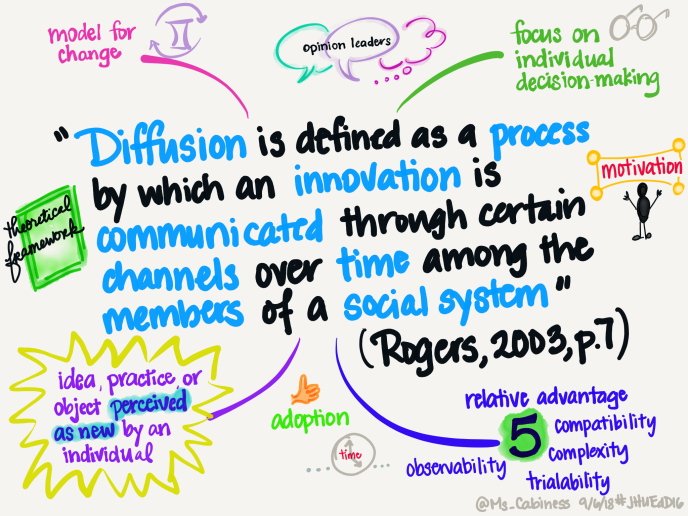
Diffusion. It’s the means by which ideas and objects are adopted and adapted into a new social system.
Rogers’ (2003) diffusion of innovation theory is not new to me. I first heard about it during my masters program when considering how best to approach teachers (and administrators) when it came to technology integration and use. Admittedly, I did not carefully consider all of the components from his model when trying to convince my colleagues that technology could not only make their lives easier but also would aid in the learning process of their students.
Fast forward eight years.
Putting together an intervention to address a problem of practice found within my context meant that I needed to take a closer look at the barriers that prevented individuals from adopting a new innovation. In this case, the individuals in question are teachers (my colleagues) and the innovation is the change to instructional practices to reflect meaningful learning with technology.
It is not easy to convince teachers to change. But I liked the approach from Simon Sinek’s TED Talk that focused on the why before considering the how and then the what.
This way of communication makes total sense. In order for people to change, they must understand the why of that change. Why is the change necessary? Why do they need to change? Why now?
My intervention is currently underway at my school site. Next week, nine teachers will participate in a day-long professional learning opportunity that will begin with the why. On that day, I will begin with the question: Why is it important to consider how technology can support meaningful learning for student?
In reading the Liao (2005) study, I have to admit that I chuckled at the thought that participants considered Angel LMS to be in any way shape or form to be user-friendly. Power School Learning (formally Haiku Learning) is user-friendly (this is the LMS that my school uses). Having said that, the conclusion from that study is promising in that as long as the technology is user-friendly, potential adopters do not need to have “moderate to high level[s] of knowledge and attentiveness to technology” (Liao, 2005, p. 13).
Good to know.
So this is where I am at the start of my intervention:
- I have a user-friendly LMS.
- I have teachers with varying levels of technology knowledge, skills, and efficacy.
- My pretest measure includes their perception of the ease of use and usefulness of technology (Venkatesh, 2000).
- I have several opinion leaders who are assisting with my intervention as head coaches (Rogers, 2003)
- I have time–in fact, I have a whole year for the intervention. My district and principal are supportive like that.
- I have a semi-controlled social system comprised of teachers from several different disciplines who are committed to the same goal–to leverage technology to support meaningful learning for students (Rogers, 2003).
Though I cannot say with certainty, I am hoping that my intervention–Peer-to-Peer Coaching–supports collective innovation-decision making. But I’m wondering, is it possible to determine the type of innovation-decision at this point in my intervention or is that something that comes out during data analysis?
References
Ashley, S. R. (2009). Innovation diffusion: Implications for evaluation. Knowledge Utilization, Diffusion, Implementation, Transfer, and Translation: Implications for Evaluation, 124, 35–45. doi:10.1002/ev.312
Liao, H.A. (2005). Communication Technology, Student Learning, and Diffusion of Innovation. College Quarterly, 8(2). Retrieved from http://collegequarterly.ca/index.html
Rogers, E. M. (2003). Diffusion of innovations (5th ed.). New York, NY: Free Press.
Venkatesh, V. (2000). Determinants of perceived ease of use: Integrating control, intrinsic motivation, and emotion into the technology acceptance model. Information Systems Research, 11, 342–365. doi:10.1287/isre.11.4.342.11872
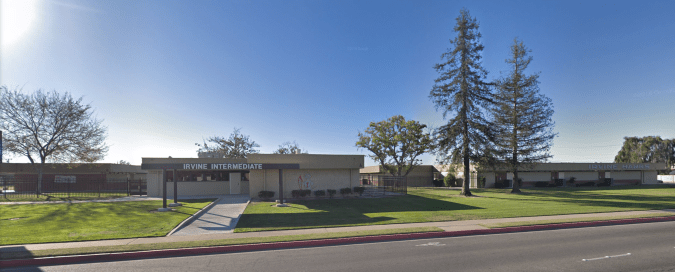 Summer is quickly coming to an end as the school year officially begins for me this Friday. My time away from my second home was well spent in reflection and relaxation as I gear up for what will be a VERY busy fall semester…not only am I finally going to be able to implement my dissertation work in the form of a year-long professional development model but I am serving on the district textbook consult AND I’m piloting two new world history textbooks.
 Living the Learning Curve