Passion Projects

It’s been awhile since I posted, but time has completely flown by this year! And, I am FINALLY getting a chance to enjoy this new chapter in my professional career as a learning consultant.

Finally.

Although the start of 2022 was a continuation of challenges from 2020 and 2021, it also afforded me the opportunity to make some rather large changes professionally. This was not a bad thing.

Leaving the classroom (and my kids) behind at the end of the semester in January was hard. And I’d be lying if I didn’t admit that I missed being with them. Because my good friends are still holding down the fort at my old school, I was privy to the activities and other things that were happening on campus. And I was also able to see some of the end-of-the-year pictures which brought tears to my eyes as I saw my 8th graders (some of whom I taught as 7th graders, too) smiling as they enjoyed the last dance of the school year and wearing the biggest grins as they walked across the stage at Commencement. It made my heart happy to know that they (that we) survived the last two years with a shifting school schedule and policy/mandates. And, I loved the sweet messages from my 7th and 8th graders in the send-off video my dear friend and Journalism advisor put together for me. =)

After I made the decision to leave the classroom, it gave me time to really think about what it is that I wanted to do . . . next. I was fortunate find two different companies who offered me projects that kept me busy. I’ve done a bit of curriculum writing, research, and tons of professional development workshops. (And I’ve had the chance to work with people from a variety of organizations whose goal is to make learning fun, engaging, and meaningful for students. Yay!) Most of these projects were within my comfort zone–with a few that were solidly at the edge of my zone of proximal development. Luckily for me, I have mentors who provided guidance and encouragement throughout this journey thus far.

Surround yourself with a village. You will not regret it. =)

Now, as the summer draws to a close and the new school year gets underway . . . I have had to readjust my mindset because for the past 27 years, I’ve only known the rush, the craziness, and the exhaustion of the start of the school year. But to be honest, I don’t miss that part at all.

One of the benefits of consulting is that I get to choose my schedule. The projects to some extent dictate deadlines, but I love that I can sleep in, have a leisurely breakfast, and walk the puppy before settling in to work. This new adventure has been a bit scary because there are so many unknowns, but I have to say that having a supportive husband and an awesome circle of friends has made this transition easier to manage.

I am truly blessed.

The start of a new school year still feels like the start of something new to me. And, I am really looking forward to finding more passion projects. =)
#Truthbomb

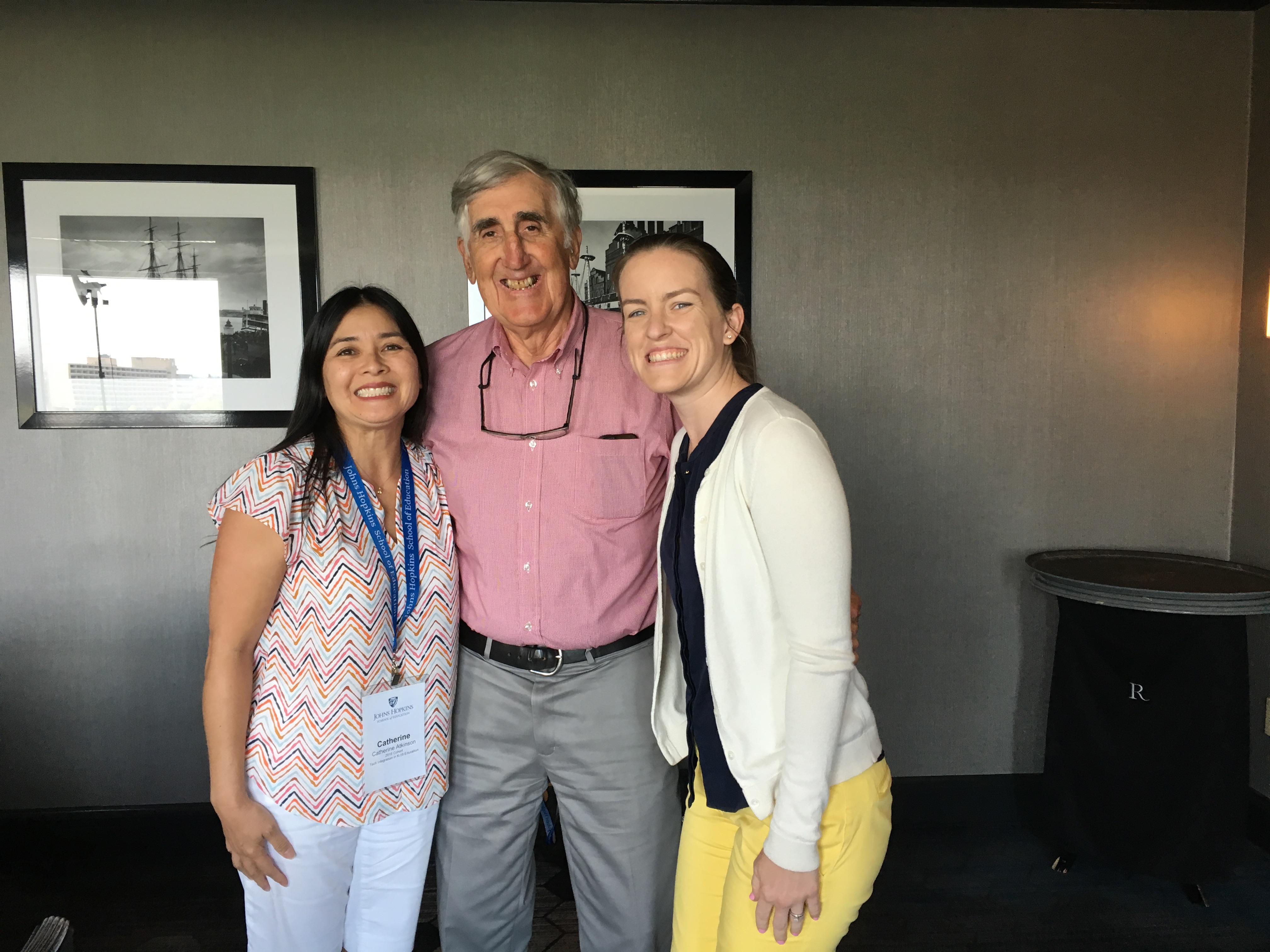
Today I came across a blog post by Larry Cuban which deeply resonated with me. During my doctoral studies, I read several of his books and studies. You will find references to him peppered throughout my dissertation. And, I had a total #fangirl moment when he came to speak at Residency in summer 2017, and I was lucky (LUCKY!!!) to be able to sit down in a small group with peers from my cohort to discuss issues in education. His words of wisdom stem from his many years as a classroom teacher, administrator, researcher, and professor…and I hung onto every.single.word.

Yup. Totally #fangirling.

His latest blog post “One Way or Two-Way Traffic? The Policy to Practice Street” included a phrase that all stakeholders (e.g., policymakers, administrators, teachers) would be wise to remember:

Teachers are not passive recipients of policy but active participants in the policy-to-practice journey

Larry Cuban (August 17, 2019)

The disconnect between research and practice is only surpassed by the HUGE gap between policy and practice. Having been in the classroom for almost a quarter of a century (gosh that makes me sound old), I have seen the trends come and go. In fact, I have been in education long enough for the pendulum to swing back (almost) to where it started when I first walked into my own classroom.

I mention this because change is hard. Very few people like change. It’s easier to maintain the status quo. But what is progress without change? One cannot better themself in anything if they are unwilling to let go of past thinking, habits, etc. Now, I have not agreed with many of the restrictive policies that have come down the pipeline from legislatures far removed from the classroom. But I’m not insubordinate. I’m not going to NOT implement the policy. But I will add my own twist to it. As Cuban wrote in his blog post, “teachers are not passive recipients of policy but active participants in the policy-to-practice journey” (Cuban, 2019).

Most teachers will take whatever comes down the pipeline and add their own twist. Now, I don’t think that their twist is done out of malice, but rather it’s because of past experience and knowledge. We are not tabula rosa. Even new teachers have an idea of who they are, what they believe in, and what works for them. This reminds me of another phrase (also used in my dissertation) from Tyack and Cuban (1995) and that is the notion of the grammar of schooling.

Anyone who has gone through the American educational system believes they know how schools should work because they experienced it first-hand. Some of us experienced 12 years of American schooling as a child. So, sure, why wouldn’t we know how schools should be run? We knew which teachers were good (or bad); we knew which strategies we liked better (and hated); we knew which classes we enjoyed more (and why). So, yes, we all have an idea of how education should “look”…

But the educational experience is different when viewed through the lens of a teacher. Teaching is hard. And anyone who tells you otherwise is lying. But just because something is hard doesn’t mean that one can’t absolutely love it. I love teaching. It’s my calling, and I cannot image a more rewarding profession to be in.

Back to my point…

Teachers are not passive recipients of anything. The policies that come down the pike may be mandated (or highly suggested), but how those policies relate to practice is a whole other story. Each school is different. Every classroom is unique. Teachers are individuals and so are their students. Cookie-cutter anything does not work. It just doesn’t.

So…my point is that anyone who is in a leadership role (whether an administrator, program specialist, professional developer), please keep in mind the end-user of your policy or strategy: teachers. We are not out to thwart your efforts at change (at least most of us aren’t), but we aren’t an empty vessel waiting to be filled either. Don’t view us as passive recipients (and don’t mistake our bored looks as being passive-anything). Don’t patronize us because you’re the one standing in the front of the room. Contrary to what the media might say, we do care what happens to our students. We want the best for them. As I’m sure you do, too. Just remember that we’re the ones who will be doing the enacting, the real application-to-practice…in conjunction with 30 to 210 unique little individuals. So don’t judge or chastise us if we don’t implement your program or strategy as it was envisioned in your head. We are not robots, so it should come as no surprise that we will apply what we’ve learned…the best way we know how…keeping in mind the diverse set of individuals who walk through our doors every day.

And that’s just my two cents.

It Takes a Village

I am on Round 2 of edits for my Chapter 5 (findings from my intervention). While waiting on feedback from my advisor, I decided to begin putting together the presentation for my dissertation defense. I like to use quotes in my presentations (even in my classroom with middle schoolers). When reflecting on books, videos, etc. which have resonated with me as an educator, I don’t think I’m alone in thinking that Innovator’s Mindset by George Couros is a solid read. I find myself going back to his book time and time again for inspiration, so it comes as no surprise that I found a quote from his book that I plan to use in the opening for my dissertation defense.

“If we want people to take risks, they have to know we are there to catch them and support them” (Couros, 2015, p. 7)

This quote serves aptly sums up the reason for my intervention design: a peer-to-peer coaching model.

My intervention (conducted during the 2018-2019 school year) focused on peer-to-peer coaching supports in helping teachers to design lessons that reflected meaningful learning with technology for students (Jonassen, Marra, Howland, & Crismond, 2008). My passion for technology stems from my love of trying new things with my students. I am not afraid to jump in with both feet. However, I know that many of my colleagues are not at that point (yet or maybe ever, and that’s ok). While they understand the role that technology can plan in helping students to acquire important skills, the learning curve both on a personal and professional level can be quite daunting.

Cue the needs assessment I conducted in spring 2017. Although I knew that my colleagues relied on each other for support, what I didn’t realize was the extent to which they provided support for each other. When questioned about external versus internal support structures, all of the teachers interviewed mentioned that they relied on peers. Proximity (location) and real-time support were two crucial features that teachers mentioned which helped them feel more comfortable with trying to integrate technology into their instructional practices.

It wasn’t hard to make the jump from an informal network of support to a more formalized support structure (i.e., quarterly release days with afterschool follow-up sessions), which formed the basis of my 8-month research study.

The findings from my study showed that teachers appreciated having a group with whom they could rely on for help. Real-time support occurred in-between classes (during passing period), before school, at lunch, and even calls or texts during class time. Data from the focus group revealed that teachers were more open to trying something new because they (1) were given time to explore and plan during the release days, (2) knew they could receive real-time support, and (3) knew they weren’t alone.

Would the teachers at my school have tried to integrate technology to support student learning outcomes in their classes without my intervention? Sure. Many of us were already doing that. But by gathering an interdisciplinary group of teachers (i.e., English, history, mathematics, science, special and general education) and giving them time to learn about technology, they were exposed to different ways of using technology to support the acquisition of important skills such as communication, collaboration, critical thinking, and creativity. They took risks, built relationships, and forged bonds over shared successes and failures. Teachers were willing to go outside of their comfort zones…and I believe it’s because they knew that their village would be there every step of the way.

References

Couros, G. (2015). The innovator’s mindset. San Diego, CA: Dave Burgess Consulting.

Jonassen, D., Howland, J., Marra, R. M., & Crismond, D. (2008). Meaningful learning with technology (3rd ed.). Upper Saddle River, NJ: Pearson Education.